All Your Questions Answered About SASSA

All Your Questions Answered About SASSA. SASSA grants raise the same questions every month eligibility, amounts, payment dates, and status checks. Below are 30 of the most common SASSA questions, answered in short, simple terms using the latest confirmed information for the 2026/2027 financial year.
1. What is SASSA?
SASSA stands for the South African Social Security Agency. It’s a government body, under the Department of Social Development, that administers and pays out social grants to eligible South Africans.
2. How many grants does SASSA offer?
SASSA offers eight main grants: Older Persons, Disability, Child Support, Foster Child, Care Dependency, Grant-in-Aid, War Veterans, and the SRD R370 grant.
3. Can I receive more than one SASSA grant?
Generally no — you can only hold one grant for yourself at a time. The one exception is Grant-in-Aid, which is paid on top of another grant to cover the cost of a caregiver.
4. How much do SASSA grants pay in 2026/2027?
From April 2026: War Veterans R2,420, Older Persons/Disability/Care Dependency R2,400 each, Foster Child R1,290, Child Support and Grant-in-Aid R580 each, and SRD R370.
5. Why hasn’t the SRD grant increased?
The SRD grant has stayed at R370 for three years straight, even though all seven other grants increased this year. It has, however, been extended through 31 March 2027.
6. Do I need to do anything to get the new grant amount?
No. If you already receive a grant, the increased amount is applied automatically from your April 2026 payment — no reapplication needed.
7. Who qualifies for a SASSA grant?
You generally need to be a South African citizen, permanent resident, or recognized refugee, and you must pass a means test that checks your income and assets.
8. What is the SASSA means test?
It’s an income and asset check used to confirm you genuinely need financial support. Limits differ by grant, so always check the specific threshold for the grant you want.
9. Who qualifies for the Older Persons Grant?
You must be a South African citizen or permanent resident aged 60 or older, and pass the means test for this grant.
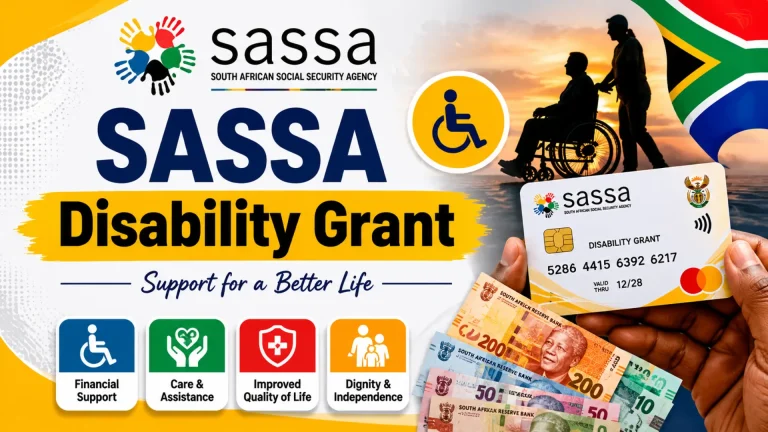
10. Who qualifies for the Disability Grant?
You need a permanent or temporary disability confirmed through an official medical assessment, plus you must meet the income and asset means test.
11. Who qualifies for the Child Support Grant?
You must be the primary caregiver of a child, usually under 18, and meet the relevant means test for your household income.
12. Who qualifies for the Foster Child Grant?
You must be a court-appointed foster parent caring for a child placed with you by an official court order. This is the one grant with no means test.
13. Who qualifies for the SRD R370 grant?
You must be 18 to 59 years old, unemployed, earning no more than R624 a month, and not receiving any other grant, UIF payout, or NSFAS funding.
14. How do I apply for a permanent SASSA grant?
Visit your nearest SASSA office with your ID, proof of income or unemployment, and any grant-specific documents (like a birth certificate or court order).
15. How do I apply for the SRD grant?
Apply entirely online at srd.sassa.gov.za using your ID number, a cellphone number in your own name, and your preferred payment method. There’s no in-person option.
16. How do I check my SASSA status?
Check online at srd.sassa.gov.za, via WhatsApp (082 046 8553), by USSD code, or by calling the toll-free line on 0800 60 10 11.
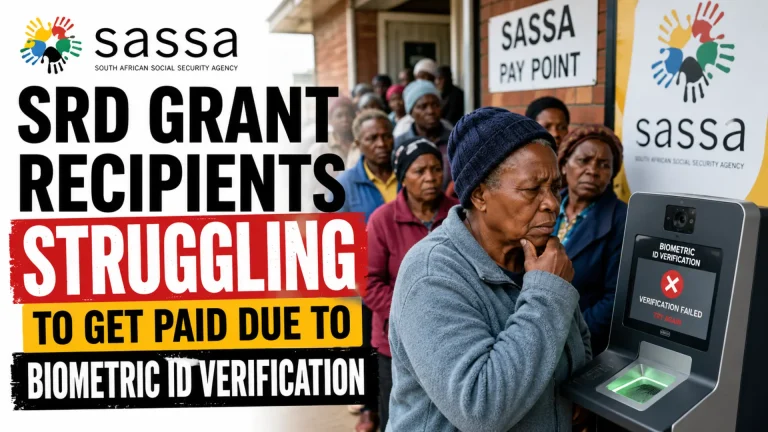
17. Why is my SRD status still “Pending”?
Common causes include high application volumes, banking verification delays, or a mismatch between your details and Home Affairs records. Some delays also come from biometric verification issues.
18. Does my SRD approval carry over every month?
No. SRD eligibility is re-checked every single month against SARS, UIF, NSFAS, and Home Affairs records, so approval in one month doesn’t guarantee approval the next.
19. When are SASSA grants paid?
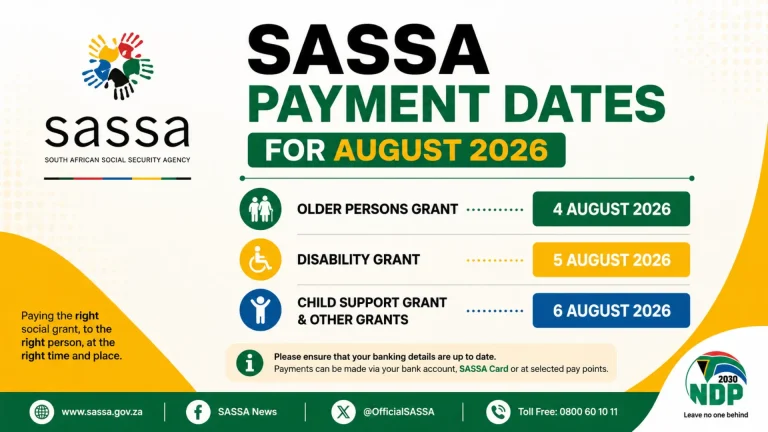
Permanent grants follow a staggered payment schedule: Day 1 is Older Persons, Day 2 is Disability, and Day 3 is children’s grants — usually the 2nd, 3rd, and 4th of the month.
20. When is the SRD R370 grant paid?
SRD payments go out in rolling batches during the last week of the month, typically between the 24th and the final business day, depending on your status check that month.
21. What happens if my application is declined?
You can file an appeal. For SRD, you have 90 days from the decline date to appeal through the official SRD appeals portal.
22. Do I need to reapply for my grant every month?
No, permanent grants continue automatically. For SRD, you don’t need to reapply either — SASSA re-verifies you automatically unless you’re asked to reapply directly.
23. What is the Postbank Black Card deadline?
All SASSA Gold Cards must be replaced with the new Postbank Black Card by 31 August 2026. After that date, Gold Cards stop working completely.
24. How do I get the new Postbank Black Card?
It’s free — just bring your ID to a Postbank point inside Shoprite, Checkers, Usave, Pick n Pay, Boxer, or Spar. Your balance transfers automatically, and you can collect in any province.
25. Can I withdraw my grant without a SASSA card?
Yes, there are alternative verified ways to withdraw your grant money without a card if yours is lost or you’re waiting on a replacement.
26. What is a SASSA life certificate?
It’s proof that you’re still alive and living in South Africa. It mainly applies to beneficiaries paid into a bank account rather than collecting in person at a paypoint.
27. How do I complete eLife Certification online?
Log in at services.sassa.gov.za, select eLife Certification, complete a biometric facial scan, review your details, then submit. It’s free and usually required annually.
28. What if my banking details change or my account closes?
Update your banking details with SASSA before your next payment cycle — online for SRD, or in person at a SASSA office for other grants.
29. Can my SASSA grant be cancelled or reviewed?
Yes. SASSA can review and cancel a grant if your income rises above the threshold or your circumstances change. You can also request cancellation yourself at a SASSA office.
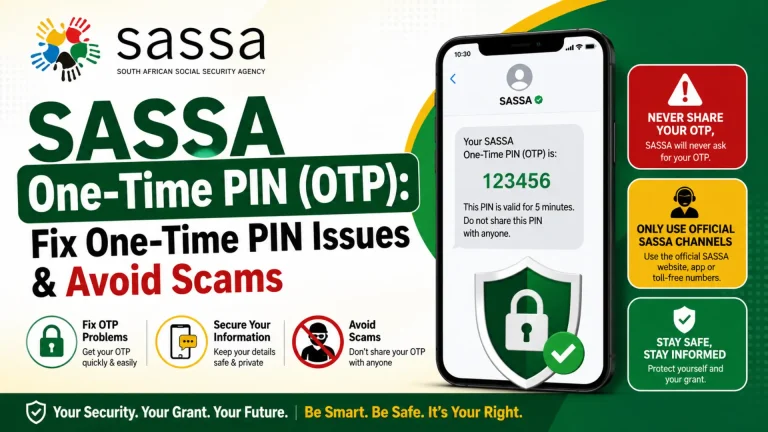
30. How do I avoid SASSA scams?
SASSA never asks for your PIN or OTP, never charges fees, and there’s no “upgraded” R700 SRD amount. Only trust links ending in sassa.gov.za, and report suspicious activity to 0800 60 10 11.
Conclusion
SASSA grants change often, so always confirm amounts, deadlines, and eligibility directly through official channels. From Postbank card swaps to monthly SRD checks, staying informed protects your payments. For the latest updates, visit SASSA News Check regularly.